For Pharma
Nimblemind transforms fragmented clinical and real-world data into structured, reliable datasets for faster cohort identification, study execution, and decision-making.
Manual data extraction is time-consuming
Real-world evidence requires manual chart abstraction from clinical notes, reports, and PDFs.
Data preparation costs are high
Per-patient data preparation can cost $1,200-$2,500, making it difficult to scale studies efficiently.
Long timelines delay study insights
Studies often take 9-18 months before datasets are ready, delaying analysis and decision-making.
Study scope is limited by constraints
Time and budget constraints restrict cohort sizes, limiting study scope and slowing evidence generation.
Our Solution
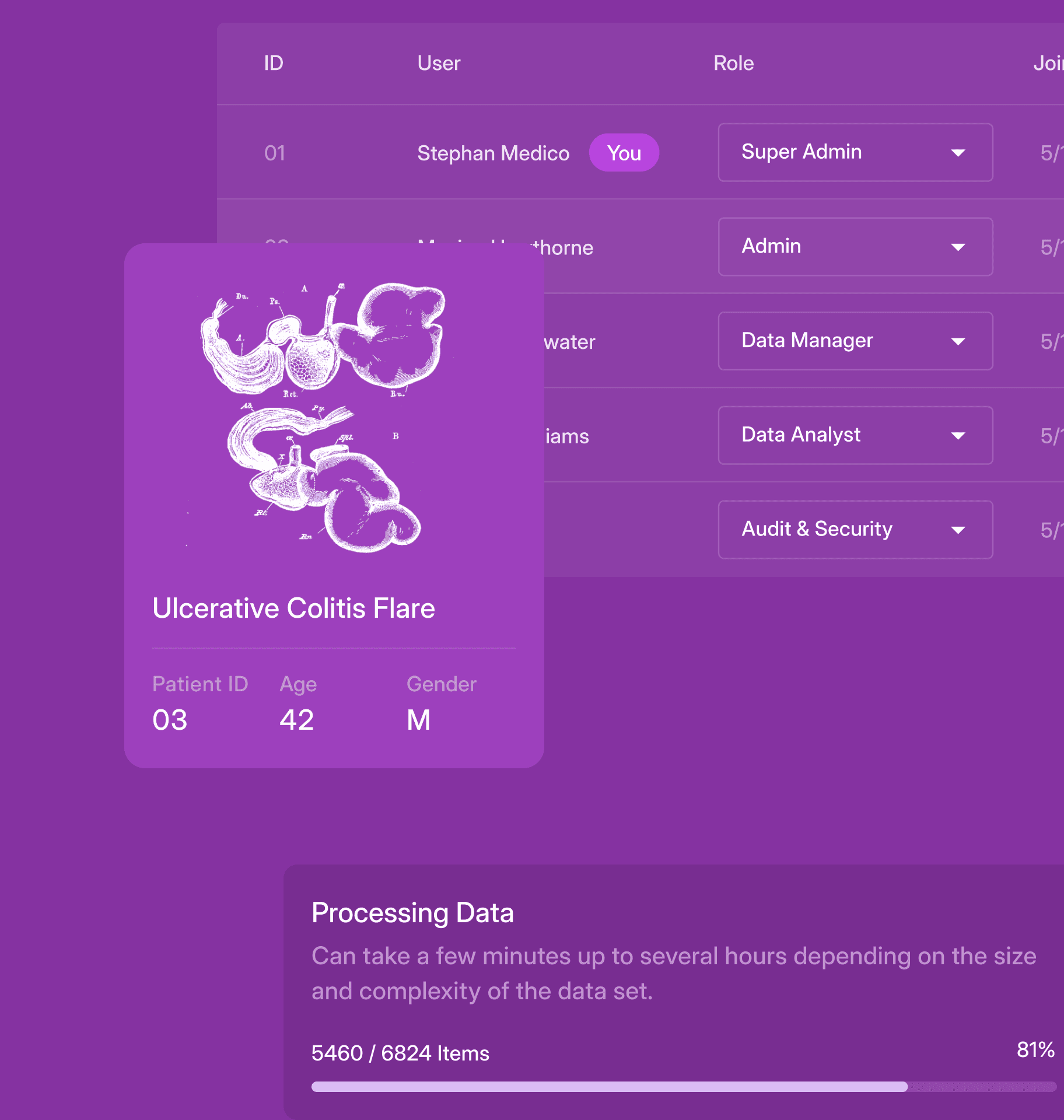
Nimblemind transforms unstructured clinical documentation into consistent, traceable datasets, enabling faster study execution and more reliable insights.
1
Extract clinical information
Identify variables like diagnoses, outcomes, treatments, and patient characteristics from unstructured clinical documentation.
3
Structure and prepare datasets
Generate standardized, analysis-ready datasets that support efficient cohort building and downstream research workflows.
Increase cohort size and study scale
Enable larger, more representative patient cohorts without increasing data preparation effort or cost.
Lower data preparation costs per patient
Reduce per-patient data prep costs by replacing manual abstraction with scalable, structured data pipelines.
Ophthalmology
Works with fundus imaging and clinical notes to generate consistent datasets for severity scoring, analysis, and clinical workflows.

Gastroenterology
Handles endoscopy video and clinical context to produce usable datasets for detection, evaluation, and downstream analysis.
Radiology
Supports radiology imaging across sources and formats, making it usable for analytics and model development.
Anatomical Pathology
Works with high-resolution pathology images to create structured datasets for analysis and deployment.
Nimblemind ingests and structures the data sources most critical to real-world evidence generation and clinical research workflows.
Modality
Examples
EMR and Clinical Notes
Diagnoses, symptoms, physician notes, discharge summaries, medications
Claims and Billing Data
Procedures, ICD/CPT codes, utilization patterns, longitudinal patient journeys
Lab and Biomarker Results
Blood panels, biomarkers, disease-specific lab values, longitudinal trends
Imaging and Diagnostics
Radiology reports, pathology reports, imaging summaries, diagnostics
Genomic and Molecular Data (where applicable)
Genetic variants, biomarker panels, pharmacogenomic profiles
Patient-Reported Outcomes (PROs)
Surveys, symptom diaries, quality-of-life assessments
Clinical Trial and Registry Data
Study records, cohort definitions, endpoints, observational registries