For Providers

Unlock the value in your clinical data to improve patient care

Health systems and specialty providers use Nimblemind to turn fragmented clinical data into structured, analysis-ready datasets, so your teams spend less time preparing data and more time on patient care.

For Providers

Unlock the value in your clinical data to improve patient care

Health systems and specialty providers use Nimblemind to turn fragmented clinical data into structured, analysis-ready datasets, so your teams spend less time preparing data and more time on patient care.

For Providers

Unlock the value in your clinical data to improve patient care

Health systems and specialty providers use Nimblemind to turn fragmented clinical data into structured, analysis-ready datasets, so your teams spend less time preparing data and more time on patient care.

For Providers

Unlock the value in your clinical data to improve patient care

Health systems and specialty providers use Nimblemind to turn fragmented clinical data into structured, analysis-ready datasets, so your teams spend less time preparing data and more time on patient care.

Providers are hindered by manual, inefficient data workflows

Providers are hindered by manual, inefficient data workflows

Manual data extraction is time-consuming

Teams rely on manual efforts to extract and curate structured information from clinical records.

Clinical data is valuable but underutilized

Research funding is declining, yet clinical data remains a valuable asset that is not fully leveraged.

Data is difficult to trust and reuse

Unstructured formats and inconsistencies make it hard to validate and apply data across use cases.

Access to data remains a bottleneck

Teams struggle to access the right data efficiently, slowing down research, operations, and decision-making.

Our Solution

From clinical data to structured, reusable datasets

From clinical data to structured, reusable datasets

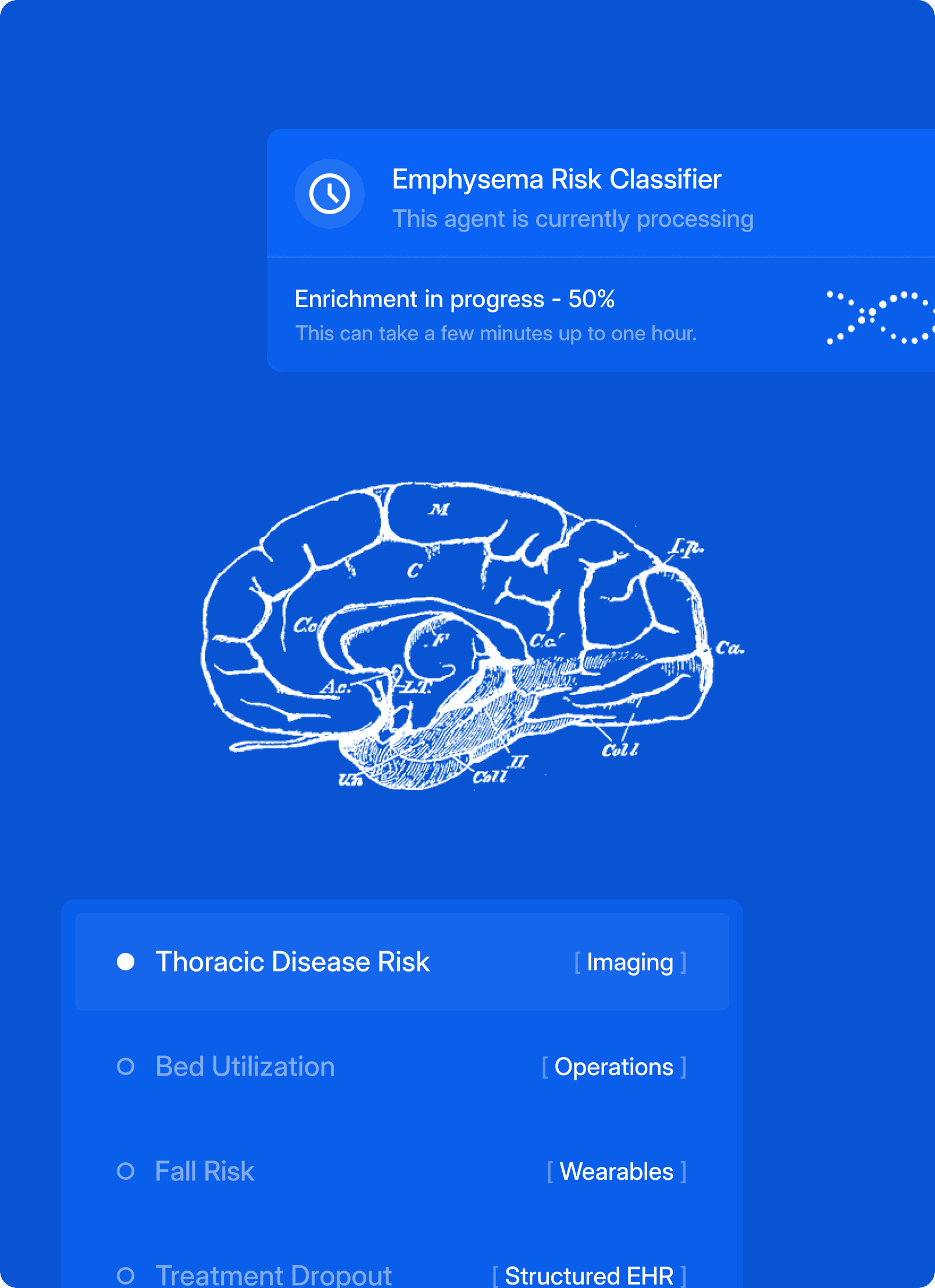
Nimblemind uses specialty-trained agents to extract, standardize, and organize clinical data into consistent datasets.

1

Extract clinical information

Identify and capture key concepts such as entities, events, attributes, and relationships from unstructured data.

2

Structure and curate data

Transform raw clinical records into standardized datasets that can be used across research, trials, and operations.

2

Structure and curate data

Transform raw clinical records into standardized datasets that can be used across research, trials, and operations.

3

Enable access and reuse

Ensure data is consistent, trusted, and reusable across teams, studies, and workflows.

4

Apply across use cases

Use structured datasets for research studies, clinical trials, data commercialization, and model development.

4

Apply across use cases

Use structured datasets for research studies, clinical trials, data commercialization, and model development.

Outcomes that prove it works

Outcomes that prove it works

Faster time to cohort

Reduce the time to identify and assemble patient cohorts from weeks or months to days or weeks, enabling faster study initiation and decision-making.

Faster time to cohort

Reduce the time to identify and assemble patient cohorts from weeks or months to days or weeks, enabling faster study initiation and decision-making.

Faster time to first dataset

Generate structured, analysis-ready datasets in weeks instead of months, accelerating research timelines and operational workflows.

Reduced manual chart review hours

Shift teams from manual data abstraction to validation, significantly reducing time spent reviewing and labeling clinical records.

Reduced manual chart review hours

Shift teams from manual data abstraction to validation, significantly reducing time spent reviewing and labeling clinical records.

Increased research throughput

Support more studies and initiatives per quarter without increasing team size by removing data preparation bottlenecks.

Reusable data pipelines

Create structured datasets that can be reused across studies, teams, and use cases instead of rebuilding one-off pipelines.

Reusable data pipelines

Create structured datasets that can be reused across studies, teams, and use cases instead of rebuilding one-off pipelines.

Improved compliance posture

Reduce uncontrolled PHI duplication and improve auditability through structured, governed data workflows.

Proven on real studies with complex care needs

Proven on real studies with complex care needs

Lynn M. Madden, PhD

CEO of APT Foundation

Lynn M. Madden, PhD

CEO of APT Foundation

Nimblemind.ai is unlocking the power of AI

in healthcare

“Nimblemind.ai is unlocking the power of AI in healthcare”

“By organizing and curating data from our EMR, patient surveys, and wearable devices, they are helping us identify patient interventions more effectively. This kind of AI-driven insight is the future of personalized, proactive care.”

Lynn M. Madden, PhD - CEO of APT Foundation
Palliative Care Speciality

Built for the data palliative teams rely on

Built for the data palliative teams rely on

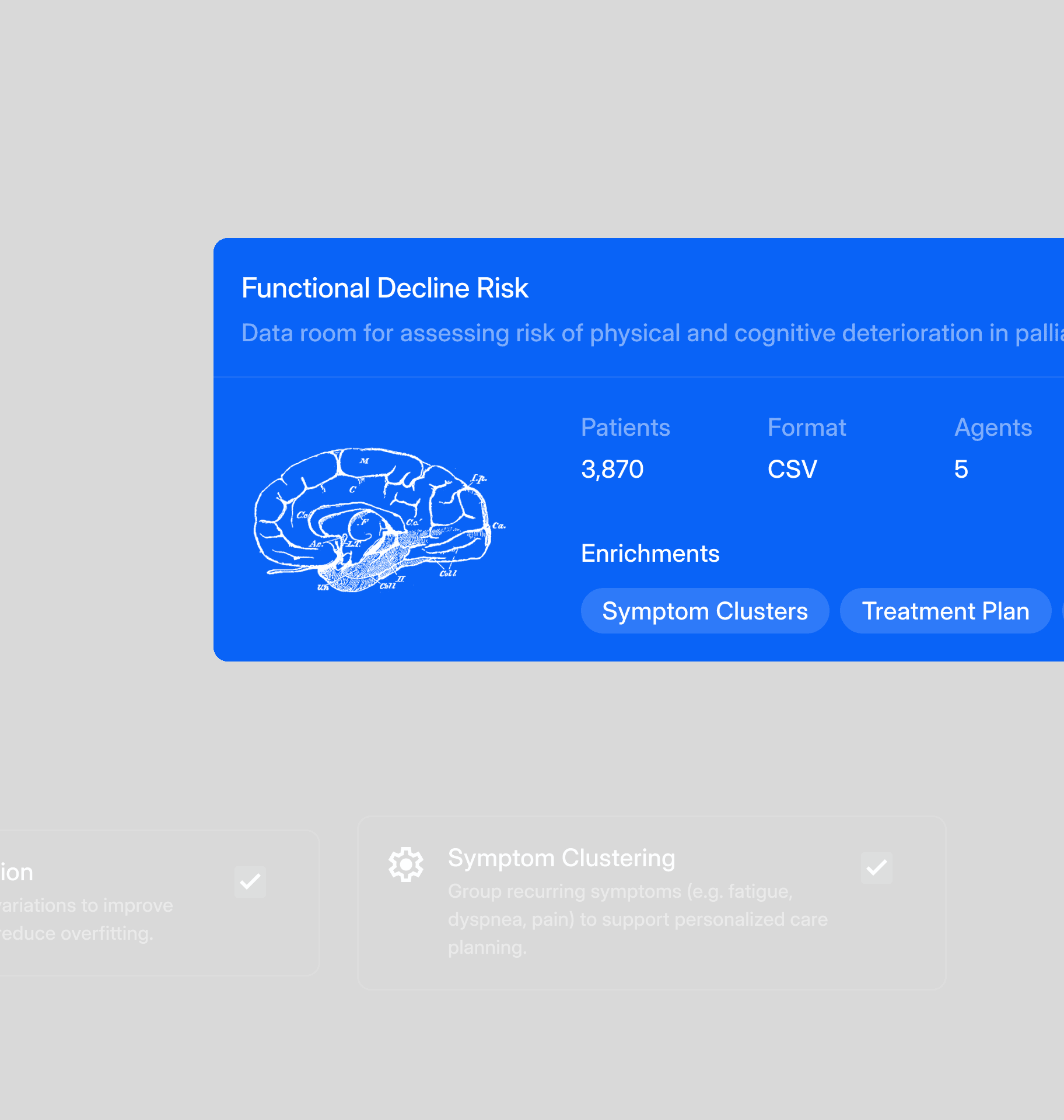
Upload electronic health records, assessments, notes, and more without formatting steps. Nimblemind structures, labels, and prepares datasets automatically, then exports directly into your workflow.

Reduce prep time

Go from raw files to labeled corpuses in hours using built-in automation

Improve data quality

Normalize noisy inputs and tag missing fields for easy cleanup

Improve data quality

Normalize noisy inputs and tag missing fields for easy cleanup

Keep governance tight

Assign and revoke access by role or study with built-in audit logs

Reuse clean corpuses

Use consistent schemas to extend datasets across patients and studies

Reuse clean corpuses

Use consistent schemas to extend datasets across patients and studies

Real-world deployments across clinical specialties

Real-world deployments across clinical specialties

Ophthalmology

Works with fundus imaging and clinical notes to generate consistent datasets for severity scoring, analysis, and clinical workflows.


Gastroenterology

Handles endoscopy video and clinical context to produce usable datasets for detection, evaluation, and downstream analysis.

Radiology

Supports radiology imaging across sources and formats, making it usable for analytics and model development.

Anatomical Pathology

Works with high-resolution pathology images to create structured datasets for analysis and deployment.

Data types supported in clinical workflows

Data types supported in clinical workflows

Nimblemind is built to process the full range of clinical data used in care delivery.

Data Type

Examples

EMRs and Clinical Notes

Diagnoses, symptom logs, palliative consult notes

Patient-Reported Outcomes

Pain scores, fatigue levels, depression scales

Medication Data

Opioid dosing schedules, PRN usage, deprescribing notes

Lab Results

Kidney function, liver enzymes, inflammatory markers

Functional Assessments

ADLs, ECOG performance status, mobility notes

Social Determinants

Caregiver availability, home environment, support systems

Speech and Audio Data

Voice samples for symptom expression, comfort assessments

Nutrition and Dietary Logs

Intake records, feeding tube data, weight loss trends

Care Planning Documents

Interdisciplinary team notes, hospice eligibility forms
See how Nimblemind supports clinical data pipelines

Book a call to explore how we help your team prepare structured, labeled datasets with less effort and more control.

Nimblemind

Nimblemind offers a faster and safer way to structure, label, and manage multimodal health data with automation, audit trails, and APIs.

© 2026 Nimblemind. All rights reserved.

Nimblemind

Nimblemind offers a faster and safer way to structure, label, and manage multimodal health data with automation, audit trails, and APIs.

© 2026 Nimblemind. All rights reserved.